Why a Drop in Ad Clicks Means Your Strategy is Finally Working
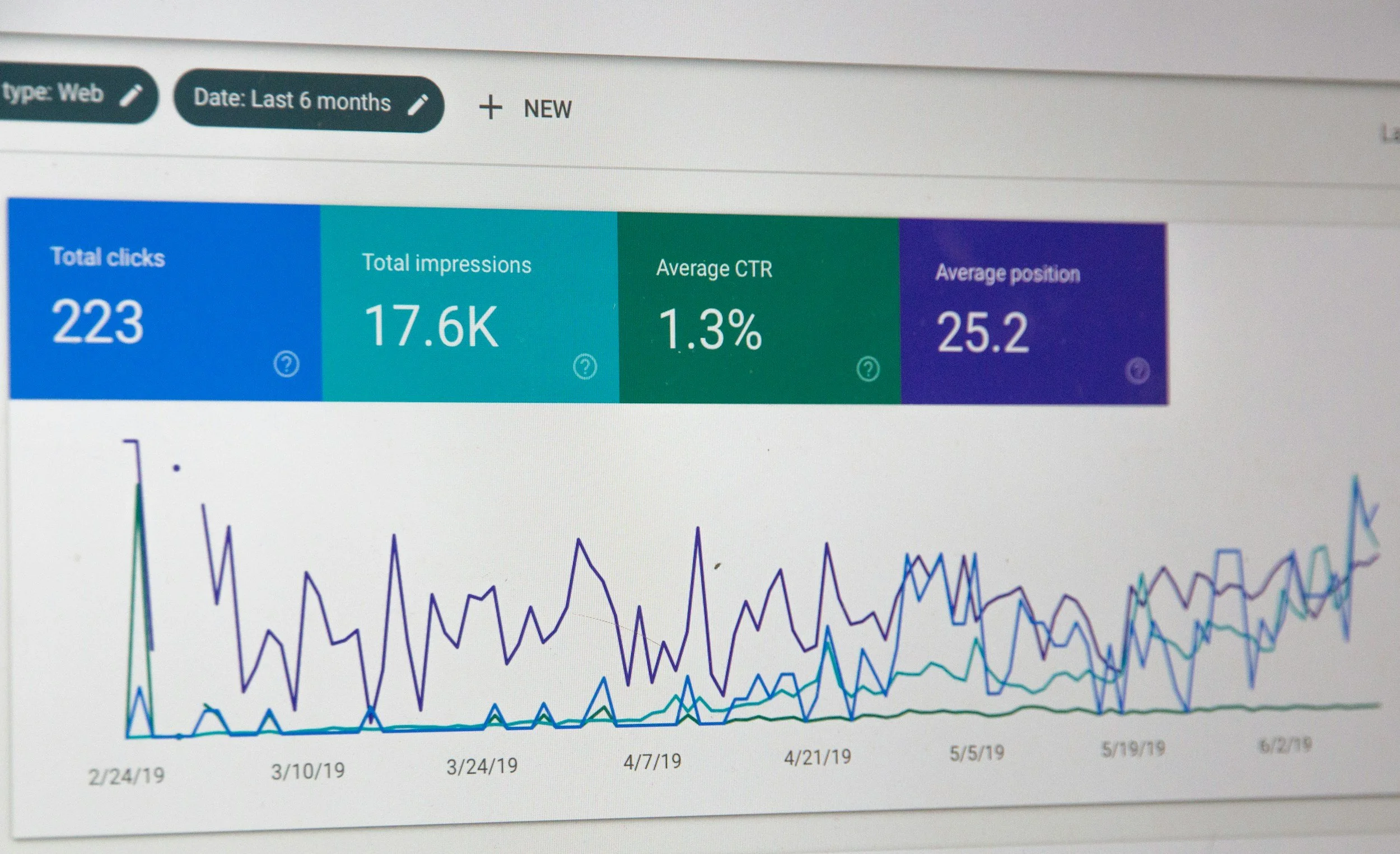
If you manage a Google Ads account for a nonprofit—whether it is a Google Ad Grant or a paid media account—few things cause a stomach drop quite like logging in and seeing your performance charts pointing straight down.
Impressions have tanked. Clicks have dried up. To make matters worse, Google is flashing a bright red warning label next to your campaigns that reads: "Limited by Budget."
Naturally, your immediate reaction is to panic. You want to log in, undo whatever changes you recently made, add back broad keywords, and make the line graphs move back up so tomorrow's dashboard looks healthy again.
But here’s the truth: Don't touch anything.
Whenever you make significant adjustments to your budget, bidding strategy, keywords, or ad assets, you’ll likely experience an uncomfortable transition. This happens when you move away from chasing vanity metrics and start requiring your ad account to focus on generating real, meaningful revenue.
Here is what is really happening behind those terrifying charts.
Ditching the Empty Calories
Unrestricted ad campaigns pull in massive volume. If you target broad concepts like "national parks" or "environmental charity," Google will gladly serve your ads to millions of people. Your monthly reports will look beautiful, packed with thousands of clicks.
The problem? Most of that traffic is completely useless. You are paying premium ad dollars (or burning through your Ad Grant) for accidental clicks from tourists looking for trail maps, students writing research papers, and casual browsers who have zero intention of supporting your mission. It feels good to see the numbers go up, but it is empty data that bleeds your budget dry.
When you tighten your keyword structures and demand that Google only target high-intent searches, your traffic should plummet. You are consciously deciding to stop buying the crowd. You are shrinking your targeting pool down to the exact, hyper-focused group of people who are actually looking to advocate, sign a petition, or donate.
You’re trading thousands of accidental visitors for a handful of deliberate supporters.
What "Limited by Budget" Really Means
Seeing a red warning label that says your campaign is underfunded is stressful, but you have to understand how Google’s software operates. At its core, that warning is often just an automated upsell feature.
When you set strict target costs for your conversions, the algorithm gets pickier. If it throws up a "Limited by Budget" alert, it usually means the system has found a highly relevant pocket of users, but your daily spending cap stopped it from entering every single auction.
For a nonprofit with fixed budgets, your response to this should be to ignore it.
You cannot hand Google more money every time it finds traffic. "Limited by budget" doesn't always mean your campaign is broken; it often means your parameters are working. It means there’s more demand out there than you care to fund, which forces the algorithm to be ruthlessly efficient. It has to stay within your boundaries and buy only the most valuable clicks it can find.
(Note: This is exactly why your event tracking in Google Analytics 4 must be flawless. Google relies on this data to confirm that a user is actually taking a valuable action on your site, rather than just casually browsing. If you aren't completely confident in your GA4 setup, our analytics team can audit and fix your tracking architecture.)
Enduring the (Learning Phase) Blackout
Whenever you shift a campaign's bidding strategy or lock down its keyword match types, you trigger an automatic "Learning Phase."
Think of this as a temporary data blackout. For about 7 to 14 days, the algorithm sits on its hands. It is analyzing search patterns, testing the new auction landscape, and figuring out how to win the right placements within your new rules. To protect your budget while it calculates, it will drastically throttle your daily spend and impressions.
The most common mistake digital managers make during this window is logging in and tweaking the settings because they are nervous about the low volume. Every time you change a budget or adjust a keyword during this phase, you reset that 14-day clock back to zero. You trap the campaign in a loop of permanent confusion.
As difficult as it is—and we certainly know how difficult it can be—you must walk away. Let the algorithm get to work and don’t make any changes until it has safely exited the Learning Phase.
Wrapping Up
Digital strategy for an advocacy group or foundation is about depth, not width. A line graph trending downward isn't always a sign of decay—more often than not, it is the visual sound of your budget being rescued from a black hole of irrelevant traffic. Focus on the conversion data, not just the impressions, the clicks, or the ad spend.
In the meantime, close the browser tab, step away from the dashboard, and give the system the time it needs to find its footing. Once the data thaws, you will find that a smaller, cleaner pool of traffic yields a significantly higher return on your investment.
Tired of guessing what your ad data actually means? Good Dog Strategies helps nonprofits and foundations cut through the vanity metrics to build digital campaigns that drive real-world impact. Whether you need a top-to-bottom Ad Grant audit or a dedicated partner to manage your paid media, we act as a seamless extension of your team.